top of page


NeuroSomatic Therapy News, Articles, Stories
In these pages you will find news, articles, blog posts, and testimonials on the applications and benefits of neurosomatic therapy and NeuroMovement® for people suffering from chronic pain, stress and anxiety and mobility issues, as well as the incredible potential that NeuroMovement® brings to Children with special needs and disabilities.
All articles feature recent findings in neuroscience that constitute the evidence base for this approach.
Click the Tags to explore the different subjects or navigate to the category of your choice and feel free to comment, contribute or contact me in case of questions!
Search

Are Emotions Stored in Your Body? What Neuroscience Says About Memory and Pain
You become angry, and your shoulder pain flares. Your jaw begins to ache, and you notice you have been clenching it while worrying. A familiar posture brings back a powerful memory, along with a tightening in your chest. These experiences are real. But does the pain, tension, or posture mean that the emotion or memory is literally stored in that part of your body? Current neuroscience suggests a more precise, and more hopeful, answer: emotions are felt through the body, but m

davidpartnertech
Oct 77 min read

Are You Brave? Fear, Avoidance, and What Your Brain Does With Both
Recently, I was followed home by an aggressive truck driver. I was genuinely afraid: my heart was racing, my body was tense, and my thinking became much less clear. Sitting safely at my desk later, I could think of several things I might have done differently. In the moment, I used the resources I had and got myself home safely. I was afraid, and I acted anyway. That experience made me think about courage, fear, and the way the brain learns from both. It also brought me back
davidpartnertech
Oct 66 min read


What Has Your Habit Been Doing for You? The Neuroscience of Change
Author: Joana Talafré
Suggested URL:/post/habits
Meta description: Discover how habits form in the brain, why stress can reinforce protective patterns, and how somatic therapy supports lasting change through mindful repetition.

Joana
Sep 46 min read


Polyvagal Exercises : A Natural Way to Ease Anxiety
Anxiety can feel like a constant companion, whispering worries and quietly taking over your body and mind until you can't remember how to live without it. So may of us are functioning on our last reserves because of it... But what if there was a natural way to ease that tension? Something rooted in your body’s own wiring? Something you learned when you were just a baby, naturally, reflexively. This is where movement comes in. Not just any movement and especially not rigidl
Joana
Jun 195 min read
Unlocking Restful Sleep: How NeuroSomatic Therapy Can Help
We have all been there. It is 2:00 AM, the house is silent, and you feel utterly exhausted. Yet, the moment your head hits the pillow, your brain decides it is the perfect time to review every conversation you had in 2014 or solve the world’s most complex problems. You try to use logic. You tell yourself, "If I don't sleep now, I will be a wreck tomorrow." You try counting sheep. You even attempt breathing exercises you found on a random app. But your brain remains wide awake
Joana
Apr 84 min read
![[HERO] Minimalist brain and butterfly representing nervous system regulation](https://cdn.marblism.com/ehIJQCCWlGU.webp)
The Gap Between Your Mind and Your Body: Why Logic Isn't Enough for Pain Relief (or Trauma Recovery)
I’ve been spending some time lately rereading Antonio Damasio’s work, specifically Feeling & Knowing . He keeps returning to a point that those of us in the body-based wellness world have been circling for a long time: feeling is not some decorative extra bolted onto our thinking. It isn’t just the "flavor" of our day. According to Damasio, feeling is foundational to how conscious life is organized. It’s deeply tied to how our bodies regulate themselves and, ultimately, how t
davidpartnertech
Mar 186 min read
![[HERO] Beyond the Surface: How NeuroSomatic Therapy Tackles Trauma Recovery](https://cdn.marblism.com/kRCzXdh9-nH.webp)
Beyond the Surface: How NeuroSomatic Therapy Tackles Trauma Recovery
For many things in life, a bad day at work, a disagreement with a partner, or general stress, talking is a fantastic tool. But when it comes to deep-seated trauma, words just aren't enough. Have you ever felt like you’ve talked about a past event a thousand times, you understand it intellectually, yet your body still reacts as if the threat is happening right now? That’s because trauma isn’t a story. Trauma is the thing that happened before the story. It lives in your non ver
Joana
Mar 95 min read
![[HERO] Is Your Language Keeping You Stuck? (A NeuroSomatic Reset)](https://cdn.marblism.com/1Y5LC1yJpsl.webp)
Fed Up? Pain in the Neck? How Your Language Impacts Chronic Pain Relief
URL: post/language Meta description: Your everyday phrases can train your nervous system to brace. Learn how language links to chronic pain patterns—and try a simple NeuroSomatic Therapy practice using Awareness + Variation for relief. Author: Joana Talafré If you’ve ever said, “I’m fed up,” “It’s a pain in the neck,” or “I’m carrying everything,” your body may have done something before you even noticed . Not as a metaphor. As a movement. That’s the part most people miss:
Joana
Feb 253 min read
Words Matter: How Your Language Impacts Your Brain
Meta description: Common phrases like “pain in the neck” often mirror real bracing patterns. Learn a simple NeuroSomatic Therapy micro-practice to reduce tension and support chronic pain relief.
Joana
Feb 234 min read
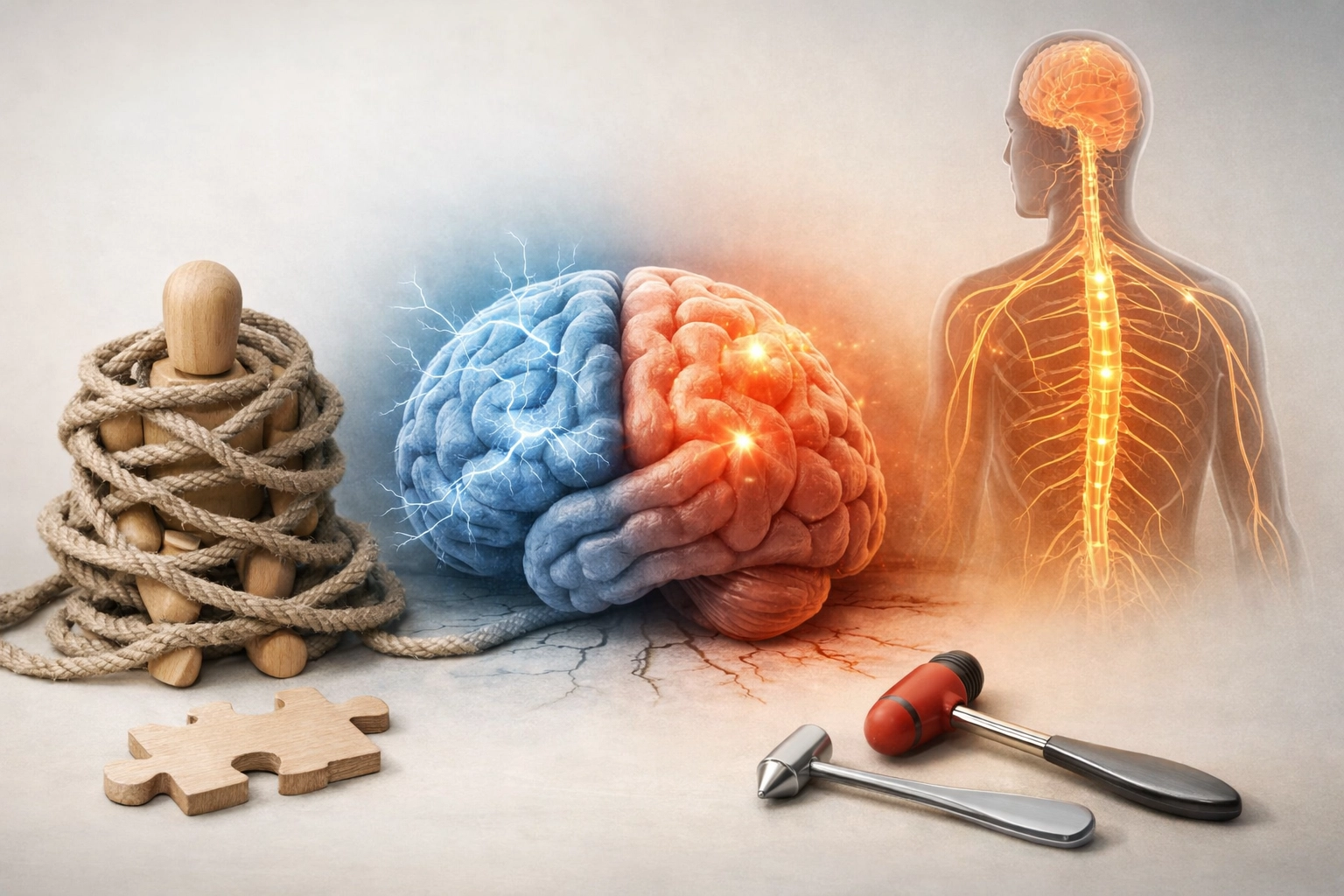
Why You Feel "Stuck": The Hidden Reflexes Controlling Your Pain and Stress
Reflexes are your nervous system's emergency protocols. They're designed to keep you alive: fast. No thinking required. The amygdala (your brain's threat detector) can trigger a defensive response in milliseconds, long before your conscious mind catches up.
Joana
Feb 164 min read

Stop Fighting Your Body: Somatic Tracking for Chronic Pain
A taste of the 4-Step Reset: Learning to witness sensations without the 'Oh no!' response. By Joana Talafré You've tried everything. Massage, stretching, foam rolling, breathing exercises. But the tension keeps coming back. The pain shows up like clockwork. And every time it does, your brain goes into full panic mode: Oh no, not again. What's wrong with me? Here's what nobody tells you: that panic response is making it worse. Your brain isn't trying to hurt you. It's trying t
Joana
Feb 94 min read

Stuck in High-Alert? Your NeuroSomatic Guide to Navigating Chaos
It’s a Mess Out There: Finding Safety in a Chaotic World The news cycle is relentless. Your inbox is overflowing. The world feels like it's spinning faster than your nervous system can keep up. And inside? It's not much calmer, racing thoughts, tight shoulders, a heart that won't settle. Here's the thing: the mess is real. External chaos is unavoidable. But how your body responds to that chaos? That's where you have more power than you think. Why Your Nervous System Reacts
Joana
Feb 23 min read

A Guide to NeuroSomatic Healing for Chronic Pain and Anxiety: The 4-Step Reset
Embodied states are always with us (and your body is listening) Emotions like anxiety, hope, vitality, grief, and relief aren’t just passing thoughts in your head. They’re embodied states —felt in your breathing, your digestion, your posture, your muscle tone, even your sense of time. This is happening every day, not only during “stressful seasons.” Your shoulders creep up while you answer emails. Your stomach tightens before a hard conversation. Your breath gets shallow whe
Joana
Jan 225 min read

Managing Change: How the Brain Navigates Transitions
Why does change feel so challenging? The answer lies in how our nervous system processes change and what we can do to support smoother transitions based on neuroscience.
Joana
Jan 195 min read

Listening Therapy and Polyvagal Theory: How Sound Helps Heal Trauma and Anxiety
Ever notice how a certain song can instantly transport you back to feeling safe, or how a loved one's voice over the phone can calm your racing heart? There's actual science behind why sound has such profound effects on our nervous system: and it's revolutionizing how we approach trauma recovery and anxiety relief. Welcome to the fascinating world of Listening Therapy, where carefully filtered music becomes a pathway to healing, grounded in cutting-edge neuroscience called Po
davidpartnertech
Dec 30, 20254 min read
The Neuroscience of Gratitude: Unlocking Your Brain's Potential
Your Brain on Gratitude When you experience genuine gratitude—not the polite "thanks" you mumble when someone holds a door, but that deep, heart-expanding appreciation—something remarkable happens in your brain. Neuroimaging studies show that gratitude activates a sophisticated network of brain regions working together like a well-orchestrated symphony. The star players include your anterior cingulate cortex and medial prefrontal cortex , areas critically involved in moral
davidpartnertech
Dec 22, 20254 min read

Traditional Therapy vs NeuroSomatic Therapy for Trauma Recovery
When Sarah walked into my Montreal practice, she'd already spent 6 years in traditional talk therapy. "I can talk about and analyze my trauma perfectly," she said, "but my body still feels like it's under attack every day. I feel like nothing's ever going to change, and I will be stuck like this for the rest of my life...". This is a story I hear too often. To me, the key to understanding how trauma heals lies in somatic intelligence. What Is Somatic Intelligence? (And Why
Joana
Dec 13, 20255 min read
The Neuroscience of Burnout: What Happens in the Brain?
If you've ever felt like burnout has literally changed your brain, you're not imagining things. Chronic stress doesn't just make you tired: it fundamentally rewires your neural circuitry through mechanisms of neuroplasticity, inflammation, and hormonal chaos. Understanding what happens in your brain during burnout can be both validating and empowering. It explains why willpower alone isn't enough, and why recovery requires a deeper, more nuanced approach.
Joana
Dec 8, 20254 min read

How Chronic Pain and Anxiety Drain Your Vitality (and What to Do About It)
Ever feel like you're running on empty, even after a full night's sleep? If you're living with chronic pain or anxiety, there's a scientific reason why your energy tank feels constantly drained. Your brain is working overtime in ways you might not realize—and it's costing you more than you think. At NeuroSomatic Therapy in Montreal (Somatic Therapy Montreal), we support Chronic Pain Relief and stress and pain management with a gentle, science-based Somatic Therapy approach—of
Joana
Dec 4, 20258 min read
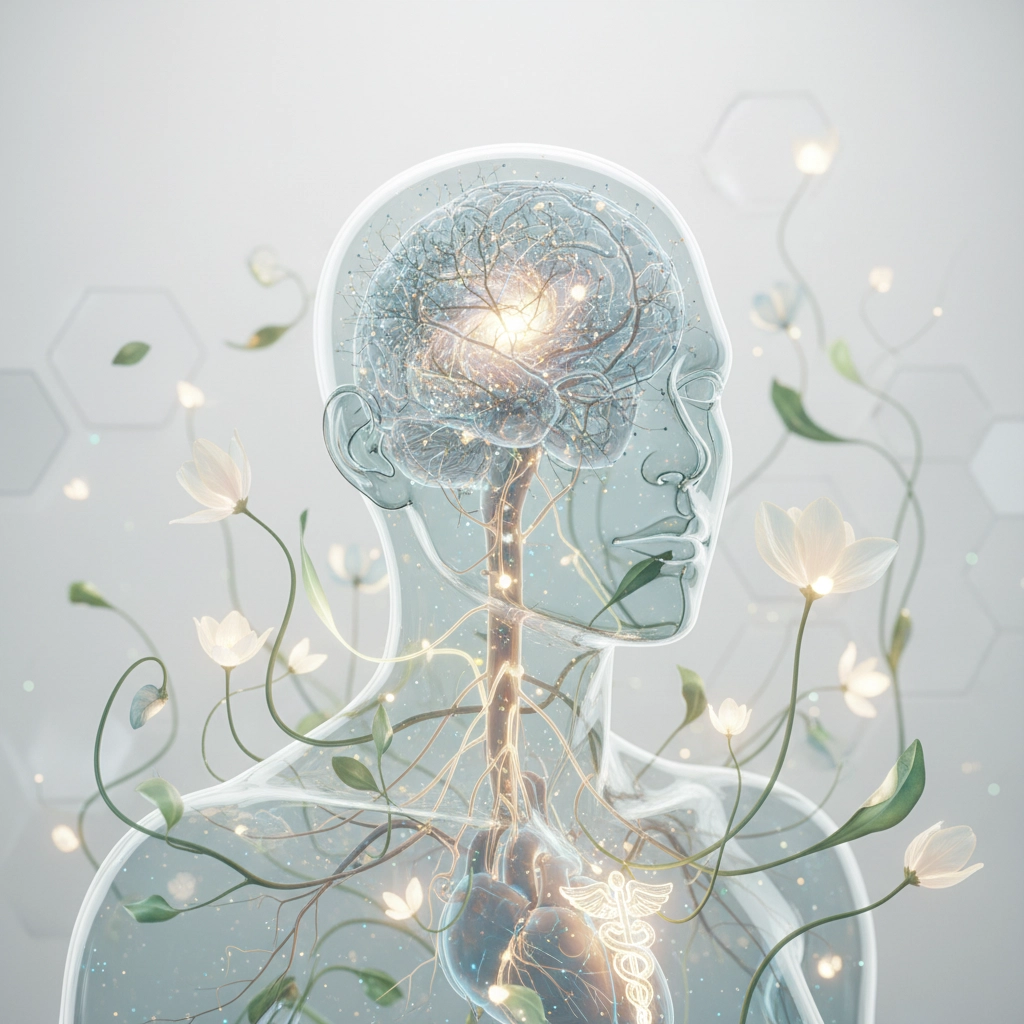
Hope, Embodied: How Science Reveals the Body–Brain Power of Future-Oriented Healing
What if hope isn't just a feeling, but a whole-body experience that literally rewires your brain for healing? Recent neuroscience reveals something remarkable: hope operates as an embodied, energetic state that creates measurable changes in your nervous system, posture, and capacity for recovery.
Joana
Nov 17, 20254 min read
bottom of page