
Traditional Therapy vs NeuroSomatic Therapy for Trauma Recovery

Updated: Jan 23
When Sarah walked into my Montreal practice, she'd already spent 6 years in traditional talk therapy. "I can talk about and analyze my trauma perfectly," she said, "but my body still feels like it's under attack every day. I feel like nothing's ever going to change, and I will be stuck like this for the rest of my life...". This is a story I hear too often. To me, the key to understanding how trauma heals lies in somatic intelligence.
What Is Somatic Intelligence? (And Why Your Body Knows Things Your Mind Doesn't)
Somatic intelligence is your body's innate ability to process, store, and communicate information through sensations, movement, and nervous system responses. Think of it as your body's own GPS system, constantly scanning for safety, registering threats, preparing responses, and guiding you toward balance, even when your conscious mind isn't aware of what's happening.
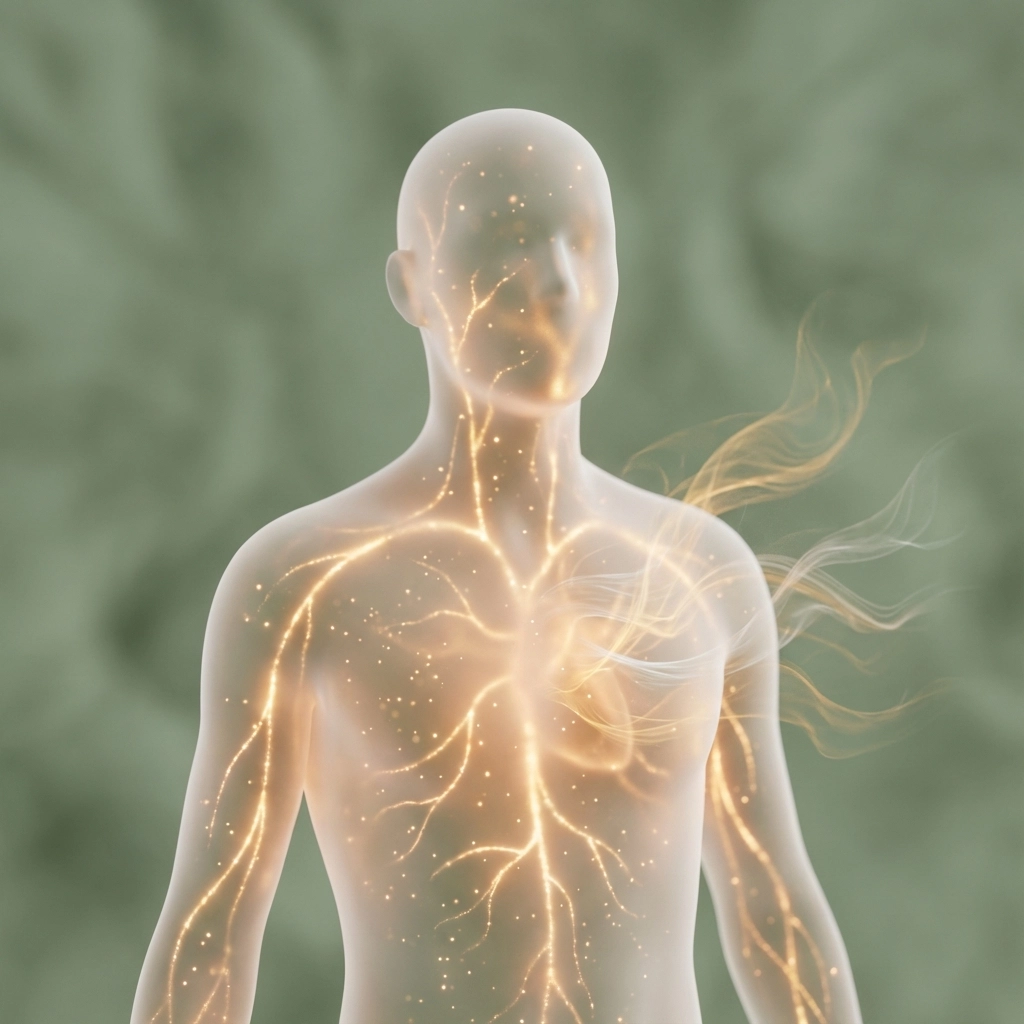
Unlike traditional cognitive processing, somatic intelligence operates through what researchers call "embodied cognition", the understanding that our thoughts and emotions are deeply rooted in our physical, sensory experiences. Your nervous system doesn't just think about safety; it feels safety through muscle tension, breathing patterns, heart rate, and countless other bodily signals. You can also see this through the lense of the brain as a predictive system: your brain plans its response to the world based on sensory input + its experience. If it has experienced trauma, then that will guide its responses to everything.
Trauma memory gets stored in these same bodily systems. When something overwhelming happens, your nervous system encodes the experience not just as a memory, but as patterns of tension, hypervigilance, and protective responses that typically persist long after the danger has passed. This is why trauma responses get "triggered", why we often end up in loops of behaviour we can't control.
Traditional Talk Therapy: The Cognitive Approach
Traditional therapy, think CBT, psychodynamic therapy, or standard counseling, focuses primarily on verbal processing and cognitive understanding. You talk through what happened, analyze patterns, and work to reframe thoughts and beliefs.
The strengths are numerous:
Excellent for understanding the story of your trauma, getting rid of guilt and rewriting some of our fears
Helps identify harmful thought and relationship patterns
Great for building thought-based coping strategies
But here's the limitation: Your nervous system doesn't speak in words. It speaks in sensations, tensions, and activation patterns. You can perfectly understand why you feel anxious after a car accident, but if your nervous system is still stuck in that moment of impact, your body will continue triggering fight-or-flight responses every time you get in a vehicle.
Research shows that while traditional therapy can be effective, it often requires years to create lasting change because it's working primarily with the cognitive brain, not the deeper survival systems where trauma actually lives. And we all know that when under stress, the higher cognitive centers of the brain are just ... offline.
NeuroSomatic Therapy: Working with Your Body's Intelligence
NeuroSomatic Therapy in Montreal takes a fundamentally different approach. Instead of just talking about your trauma, we work directly with your nervous system's intelligence to help it complete the protective responses that got interrupted during the traumatic experience.

Think of it this way: imagine your nervous system as a smoke detector that got stuck in the "on" position during a real fire. Traditional therapy might help you understand why the alarm is going off, but NeuroSomatic Therapy actually helps reset the detector so it can distinguish between real danger and safety.
Here's how somatic intelligence works in practice:
We pay attention to what your body is telling us through:
Sensations: That knot in your stomach, tension in your shoulders, or feeling of being "disconnected"
Movement patterns: How you hold yourself, breathe, or move through space. Thoughts and emotions are also movement patterns!
Nervous system responses: Your heart rate, muscle tension, and activation levels
Interoception: Your ability to sense internal bodily signals
Instead of just talking about anxiety, we might notice that your chest feels tight and your breathing is shallow. Rather than analyzing why, we work with your nervous system's natural ability to regulate itself, perhaps through gentle movement, breathing techniques, or helping you sense the support of the chair beneath you.
The Science: Why Your Body Holds the Keys to Healing
Recent neuroscience research reveals something fascinating: hope, healing, and recovery aren't just mental states, they're deeply embodied experiences that emerge from the integration of brain networks, memory systems, and bodily sensations.
Your brain's healing networks, including the prefrontal cortex, hippocampus, and default mode network, don't just process thoughts; they integrate sensory information, movement, and emotional responses to create what we experience as resilience and recovery.

This is why somatic approaches often produce faster and deeper results for trauma recovery, chronic pain, and anxiety relief. When we work with your nervous system's natural intelligence, we're engaging the same systems that got disrupted during the traumatic experience.
Real-World Healing: What This Looks Like
Let me share how this plays out. Marc, a client dealing with chronic anxiety after a workplace incident, came to my office after two years of traditional therapy. While he understood his triggers intellectually, his body remained in constant hypervigilance.
In our NeuroSomatic sessions, instead of rehashing the incident, we worked with what his nervous system was experiencing right now. We helped his body remember what safety felt like through gentle movement, breathing, and sensory awareness. Within six sessions, his anxiety levels dropped significantly: not because we'd analyzed his trauma more deeply, but because we'd helped his nervous system update its safety database.
The key insight: Trauma recovery isn't just about understanding what happened: it's about helping your nervous system learn that the danger is over and it's safe to relax, connect, and thrive again.
Choosing Your Path: Traditional vs NeuroSomatic Approaches
Both approaches have their place, and the best choice depends on your specific needs:
Traditional therapy might be ideal if:
You prefer verbal processing
You want to understand complex patterns and relationships
You need support building cognitive coping strategies
You're working through ongoing life stressors
NeuroSomatic Therapy might be transformative if:
You feel "stuck" despite understanding your trauma intellectually
You experience chronic pain, anxiety, or stress-related symptoms
You want faster, more embodied healing
Traditional therapy hasn't provided the relief you're seeking
You're dealing with PTSD, panic, or hypervigilance
Intégrating Both Worlds: The Future of Trauma Recovery
The most exciting development? Many practitioners now integrate both approaches. You might use traditional therapy to build understanding and coping skills while using NeuroSomatic techniques to help your nervous system actually process and release stored trauma.
At NeuroSomatic Therapy, we often work collaboratively with traditional therapists, creating a comprehensive approach that honors both your need to understand and your body's need to heal.
Your Next Step: Découvrez Your Body's Intelligence
If you've been working hard in traditional therapy but still feel like something's missing: if your body feels stuck even when your mind understands: it might be time to explore what your somatic intelligence has been trying to tell you.
Your nervous system holds incredible wisdom about what you need to heal. Sometimes we just need to learn how to listen.
Ready to discover what your body knows about healing? Book a free 15-minute consultation at NeuroSomatic Therapy and let's explore how somatic intelligence might unlock the healing you've been seeking. Your nervous system has been waiting patiently to share what it knows: il est temps to listen.
References:
Barsalou, L. W. (2008). Grounded Cognition. Annual Review of Psychology.
Seligman, M. E. P., Railton, P., Baumeister, R., & Sripada, C. (2013). Navigating Into the Future or Driven by the Past. Perspectives on Psychological Science.
Snyder, C. R. (2002). Hope Theory: Rainbows in the Mind. Psychological Inquiry.

Comments