
The Neuroscience of Burnout: What Happens in the Brain?

Updated: Jan 5
If you've ever felt like burnout has literally changed your brain, you're not imagining things. Chronic stress doesn't just make you tired: it fundamentally rewires your neural circuitry through mechanisms of neuroplasticity, inflammation, and hormonal chaos. Understanding what happens in your brain during burnout can be both validating and empowering. It explains why willpower alone isn't enough, and why recovery requires a deeper, more nuanced approach.
Let's explore the fascinating and sobering science of how burnout reshapes the brain, region by region.
The Amygdala: Your Overactive Alarm System
When you're burned out, your amygdala: the brain's ancient alarm system: goes into overdrive. This almond-shaped structure, designed to detect threats and trigger fight-or-flight responses, literally grows larger under chronic stress.
Research published in Biological Psychiatry by Savic (2015) found that individuals with burnout showed increased amygdala volume and heightened connectivity to stress-related brain regions. This isn't just correlation: it's structural change. Your threat detector becomes hyperactive, scanning constantly for danger even when you're supposedly safe.
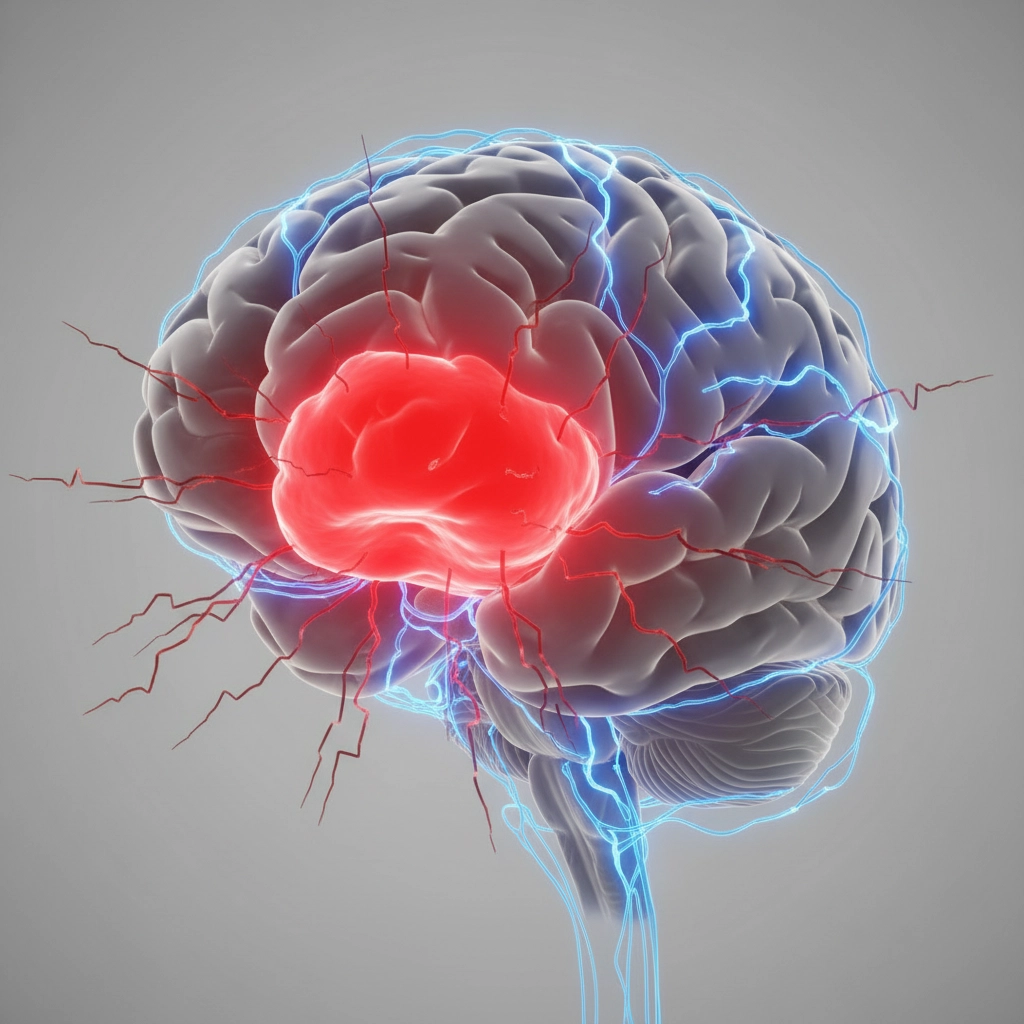
The result? Everything feels like a threat. An email notification triggers the same neural response as a predator would have thousands of years ago. Your morning commute becomes a minefield of potential stressors. Even positive events can feel overwhelming because your amygdala can't distinguish between real and imagined dangers anymore.
This explains why people with burnout often describe feeling "on edge" all the time. Your brain has quite literally rewired itself to expect trouble around every corner.
The Prefrontal Cortex: When Your CEO Goes Offline
While your amygdala grows stronger, your prefrontal cortex (PFC): the brain's CEO responsible for executive function: starts to deteriorate. This region manages attention, planning, impulse control, and emotional regulation. Under chronic cortisol exposure, it begins to shrink.
MRI studies by van Dam and colleagues (2017) published in Frontiers in Psychology revealed reduced gray matter density in the prefrontal cortex among burnout subjects. The very part of your brain responsible for rational thinking, decision-making, and staying calm under pressure becomes impaired precisely when you need it most.
This prefrontal impairment manifests as:
Brain fog and difficulty concentrating
Poor decision-making abilities
Emotional outbursts over minor triggers
Inability to prioritize tasks effectively
Loss of creative problem-solving skills
It's like having your most skilled manager leave during a crisis: everything becomes harder to manage.
The Hippocampus: Memory Under Siege
Your hippocampus, crucial for memory formation and contextual learning, also suffers significant damage during burnout. High cortisol levels literally shrink the dendritic connections in this brain region, as documented in research by McEwen (2017) in the Annual Review of Medicine.
This hippocampal suppression creates a dangerous feedback loop. The hippocampus normally helps your brain distinguish between real threats and false alarms by providing context: "This situation reminds me of X, but X wasn't actually dangerous." When it's impaired, your brain loses this crucial ability to put experiences in perspective.

You might notice:
Difficulty remembering recent conversations or tasks
Trouble learning new information
Everything feels equally urgent and threatening
Past traumas feel more present and vivid
Inability to see situations rationally
Without proper hippocampal function, your brain treats a difficult meeting the same way it would treat a life-threatening emergency.
The Reward System: When Nothing Feels Worth It
Perhaps most devastating is what happens to your brain's reward circuits during burnout. The dopamine system, particularly in areas like the ventral striatum and nucleus accumbens, becomes severely blunted. Research by Bianchi and colleagues (2019) in Trends in Cognitive Sciences shows how burnout disrupts the brain's "reward prediction" mechanism.
This means activities that once brought joy, motivation, and satisfaction no longer trigger the same neural responses. Your brain literally stops anticipating pleasure from things you used to love. Work achievements feel hollow. Hobbies lose their appeal. Even basic self-care can feel pointless.
This isn't laziness or lack of willpower: it's neurobiological. Your reward circuits have been hijacked by chronic stress, making it nearly impossible to feel motivated or experience satisfaction naturally.
Network-Level Chaos: When Brain Networks Stop Talking
Beyond individual brain regions, burnout disrupts the communication between major neural networks. Functional MRI studies reveal disrupted connectivity between:
The Default Mode Network (DMN): Responsible for rest and introspection
The Salience Network: Determines what deserves attention
The Executive Network: Manages goal-directed behavior
When these networks can't communicate effectively, your brain gets stuck in a state of constant problem-scanning. Instead of naturally cycling between focused attention, creative thinking, and restorative rest, you remain trapped in vigilant monitoring mode.
This network disruption explains why rest doesn't feel restorative during burnout. Your brain literally can't shift into recovery mode: it's perpetually scanning for threats that may not exist.
The NeuroSomatic Connection: Hope for Burnout Recovery
Understanding the neuroscience of burnout reveals why traditional approaches often fall short. You can't think your way out of structural brain changes, but here's the hopeful news: neuroplasticity works both ways.
The same mechanisms that allowed chronic stress to rewire your brain can be harnessed for recovery. NeuroSomatic Therapy approaches leverage this neuroplasticity by:
Calming the hyperactive amygdala through gentle, mindful movement
Restoring prefrontal function via attention-based practices
Supporting hippocampal recovery through safe, contextual learning
Reactivating reward circuits through pleasurable, embodied experiences
Rebalancing neural networks through integrated somatic approaches
In Somatic Therapy Montreal sessions, we work directly with these neural systems, helping your brain remember what safety feels like. This isn't just relaxation: it's neurological reprogramming.
From Chaos to Calm: Your Brain's Burnout Recovery Journey
Recovery from burnout isn't about pushing through or trying harder. It's about systematically rewiring the very neural patterns that keep you trapped in chronic stress. The brain that got you into burnout is not the brain that will get you out: you need to literally grow a new one.
Chronic Pain Relief often accompanies burnout recovery because the same stress hormones that damage cognitive function also amplify pain perception. As neural balance restores, both mental and physical symptoms often resolve together.
This is why effective stress and pain management requires more than coping strategies: it demands neurological transformation.
Ready to begin your journey from chaos to calm? Your brain has an incredible capacity for renewal, but it needs the right conditions and guidance to heal. Don't let burnout steal another day of your vitality.
Register for the Chaos to Calm course and discover how to rewire your brain for resilience, joy, and sustainable energy. Your future self will thank you.
Joana Talafré is a NeuroSomatic Therapist helping ambitious professionals transform their relationship with stress and reclaim their natural vitality through science-based somatic approaches.


Comments