
How Chronic Pain and Anxiety Drain Your Vitality (and What to Do About It)
- davidpartnertech
- 2 days ago
- 8 min read

Ever feel like you're running on empty, even after a full night's sleep? If you're living with chronic pain or anxiety, there's a scientific reason why your energy tank feels constantly drained. Your brain is working overtime in ways you might not realize—and it's costing you more than you think. At NeuroSomatic Therapy in Montreal (Somatic Therapy Montreal), we support Chronic Pain Relief and stress and pain management with a gentle, science-based Somatic Therapy approach—often referred to as Neurosomatic Therapy—so you can move and feel better.
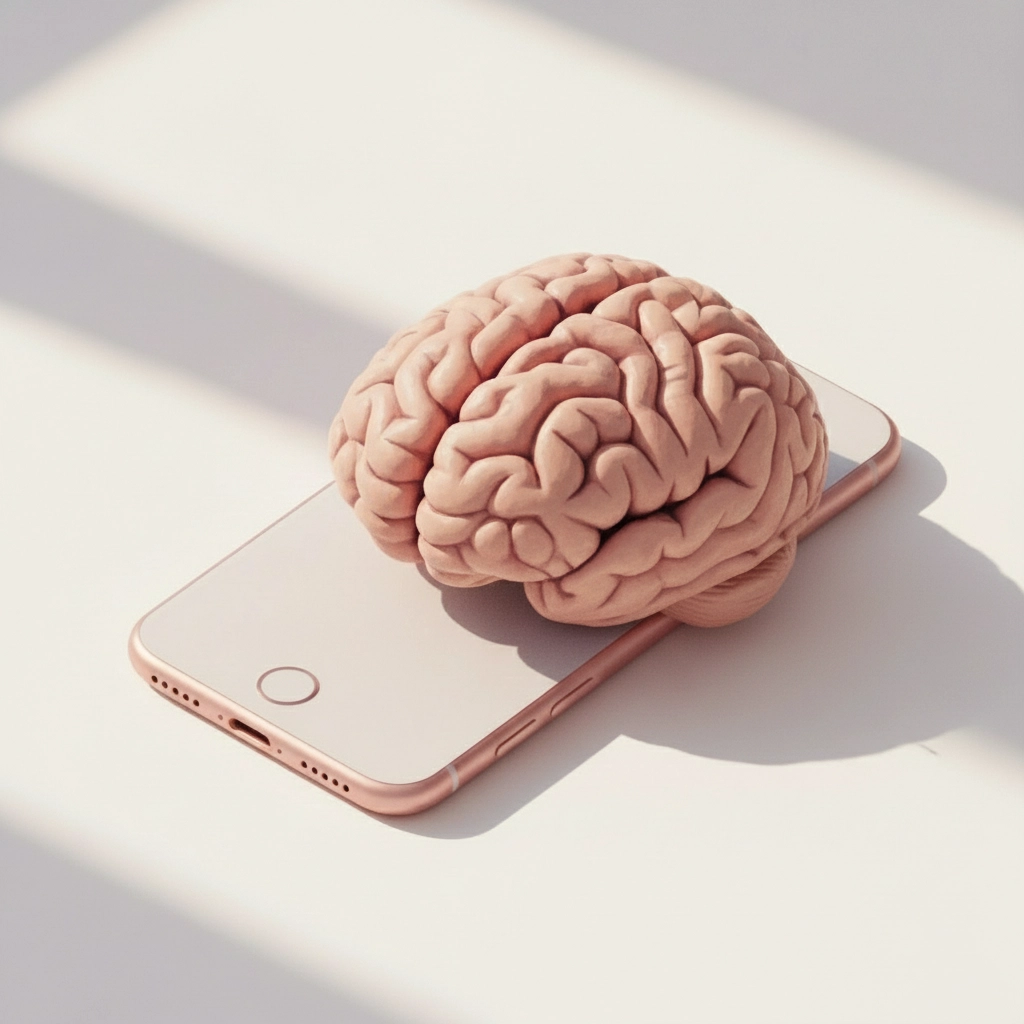
Your Brain's Energy Budget Crisis
Chronic pain and anxiety increase neural activity in salience and threat networks, bias prediction and error monitoring, and elevate sympathetic drive and HPA-axis output. The result is a higher baseline use of glucose and oxygen for vigilance and nociceptive modulation, leaving fewer resources for recovery and goal-directed behavior.
Evidence shows that persistent pain elevates baseline metabolic demands and inflammatory signaling—part of what stress scientists call allostatic load. Even at rest, the brain and body expend more resources to monitor and modulate nociception and threat. When anxiety co-occurs, perseverative worry and hypervigilance keep the autonomic nervous system on high alert, compounding the energy drain.
The Hidden Energy Leaks You Don't See Coming
Sleep: Your Recharge Station Under Attack
Pain and anxiety are notorious sleep thieves. They reduce slow-wave sleep continuity and REM stability, producing nonrestorative sleep, impaired glymphatic clearance, and next-day fatigue.
When your sleep gets disrupted night after night, your nervous system stays in a heightened state of alertness. Instead of getting the deep recovery your body craves, you're stuck in a cycle where each day starts with an already depleted energy reserve.
The Movement Penalty
Here's something most people don't know: chronic pain changes how you move, and inefficient movement patterns burn more energy. When you're in pain, you unconsciously alter your gait, posture, and muscle activation patterns. This often increases co-contraction and reduces mechanical efficiency, raising the energy cost of movement for the same tasks.
Studies show that older adults with hip or knee pain use significantly more energy when walking compared to pain-free individuals. Your body develops protective strategies that, while trying to minimize pain, actually maximize energy expenditure.
The Emotional Energy Drain
Living with chronic pain or anxiety isn't just physically exhausting—it's emotionally depleting. The constant vigilance, the unpredictability, the frustration of cancelled plans and limited activities all take their toll. Your nervous system stays stuck in survival mode, scanning for threats and burning through energy reserves at an unsustainable rate.
Why Your Brain Needs New Experiences
Here's where things get interesting (and hopeful). Your brain is incredibly adaptable—what neuroscientists call neuroplasticity. The same brain that learned to create chronic pain patterns can learn new, healthier responses. But it needs the right kind of input.
When pain or anxiety persist, cortical and subcortical networks favor well-learned threat predictions and avoidance patterns. Introducing safe, low-intensity novelty can update predictive models and reduce overprotective responses.
The key is giving your nervous system novel experiences—movements and sensations that feel safe but different from your usual patterns. This isn't about pushing through pain or forcing your body into submission. It's about offering your brain new information that can help it update its threat assessment system.
The Gentle Revolution: How Mindful Movement Rewires Your Response
Low-intensity, mindful movement can recalibrate predictive coding and enhance descending pain modulation while improving interoceptive accuracy. Moving within comfort reduces threat prediction errors and supports efficient motor control.
These shifts act through autonomic regulation—decreasing excessive sympathetic arousal and facilitating parasympathetic recovery—so baseline energy use drops and restorative processes can proceed.
Creating Safety in Your Body
A key change occurs when threat appraisal decreases. Beyond objective safety, the brain updates its internal model and permits reduced vigilance.
Gentle, controlled movements provide precise, low-threat sensory input that lowers hypervigilance and facilitates top-down inhibition of nociception.
Practical Steps to Restore Your Energy
Start Where You Are
You don't need to run a marathon or master yoga to benefit from movement. Start with what feels possible today. Maybe it's gentle neck rolls while seated, or mindful breathing during a short walk. The key is consistency, not intensity.
Listen to Your Internal Wisdom
Your body has incredible intelligence about what it needs. Gentle movement practices help you tune into these subtle signals rather than overriding them. Pay attention to what feels expansive versus contractive, what brings ease versus tension.
Create Micro-Moments of Ease
Throughout your day, look for tiny opportunities to shift your nervous system state. A few conscious breaths, gentle shoulder shrugs, or even just pausing to notice something beautiful around you can help interrupt the chronic stress patterns that drain your energy.
From Exhaustion to Efficiency: A Science-Based Path Forward
You don't need to push through pain to reclaim energy. Small, safe, and novel signals help the brain update its threat predictions and reduce unnecessary protective output. Aim for consistency over intensity; the goal is to reduce allostatic load and improve movement efficiency.
Try this, gently and within comfort:
60–90 seconds of slow nasal breathing (about 5–6 breaths/min) while softening your shoulders; stop if symptoms increase.
One minute of micro-movements: explore 3–5% range of motion in a stiff area with curiosity, then rest; notice if effort can be reduced.
Brief safety check: name 3 things you can see, 2 you can feel, 1 you can hear; wait for a small exhale or sigh.
Call to action If this article helped, share it with someone who needs hope. Ready for Chronic Pain Relief and calmer days? Book a free 15-minute call or schedule a NeuroSomatic Therapy session in Montreal or online: www.neurosomatic.org.
References
Apkarian AV, Hashmi JA, Baliki MN. Pain and the brain: specificity and plasticity. Neuron. 2011;70(3):437–448. doi:10.1016/j.neuron.2011.04.026
McEwen BS, Stellar E. Stress and the individual: mechanisms leading to disease. Ann N Y Acad Sci. 1993;840:33–44. doi:10.1111/j.1749-6632.1993.tb27056.x
Thayer JF, Lane RD. A model of neurovisceral integration in emotion regulation and dysregulation. J Affect Disord. 2000;61(3):201–216. doi:10.1016/S0165-0327(00)00338-4
Hodges PW, Tucker K. Moving differently in pain: a new theory to explain motor adaptation to pain. Pain. 2011;152(3 Suppl):S90–S98. doi:10.1016/j.pain.2010.10.020
Finan PH, Goodin BR, Smith MT. The association of sleep and pain: an update and a path forward. J Pain. 2013;14(12):1539–1552. doi:10.1016/j.jpain.2013.08.007
Van Damme S, Crombez G, Eccleston C. Retarded disengagement from pain: an experimental investigation. Pain. 2004;111(3):285–290. doi:10.1016/j.pain.2004.07.005
Wiech K. Deconstructing the sensation of pain: the influence of cognitive processes on pain perception. Science. 2016;354(6312):584–587. doi:10.1126/science.aaf8934
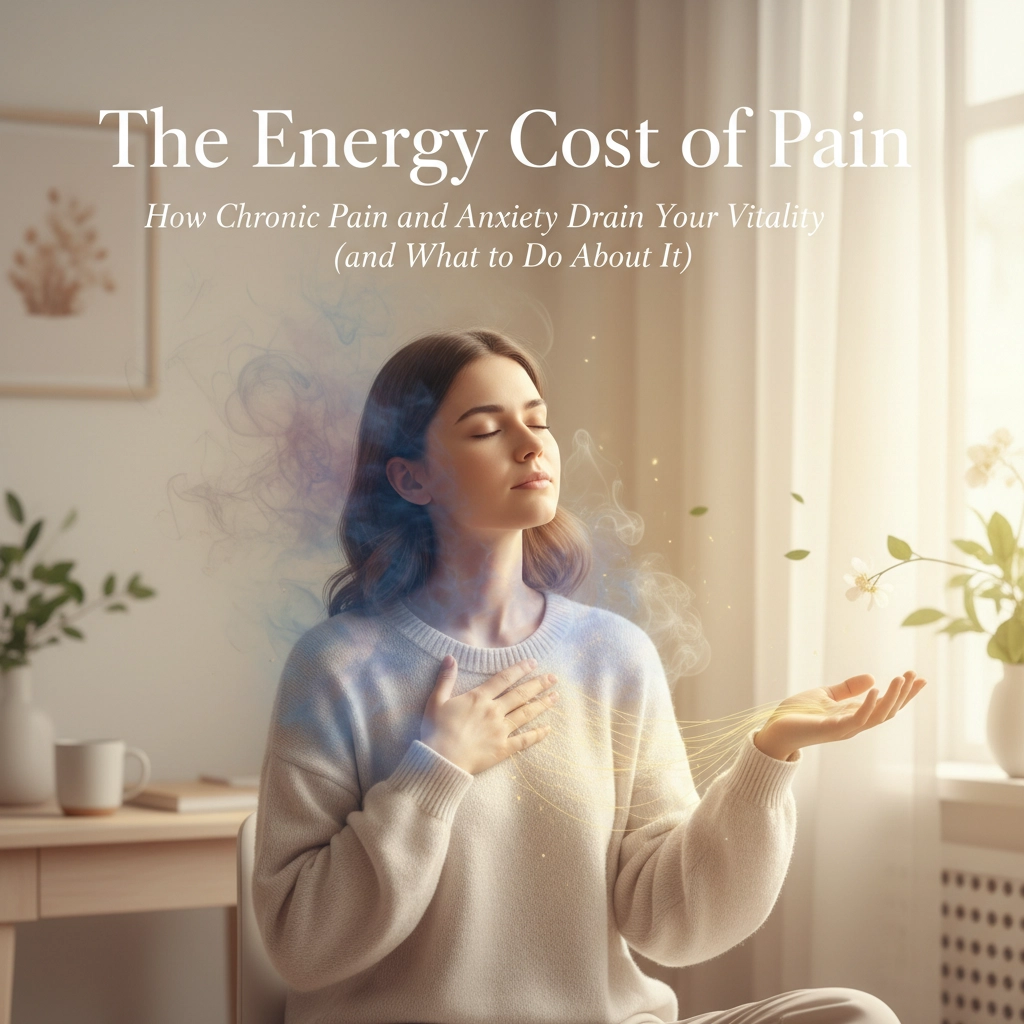
Le Coût Énergétique de la Douleur : Comment la Douleur Chronique et l'Anxiété Épuisent Votre Vitalité (et Que Faire)
Vous sentez-vous toujours à court d'énergie, même après une nuit complète de sommeil ? Si vous vivez avec la douleur chronique ou l'anxiété, il y a une raison scientifique pour laquelle votre réservoir d'énergie semble constamment vide. Votre cerveau travaille en heures supplémentaires de façons que vous ne réalisez peut-être pas—et cela vous coûte plus que vous ne le pensez. Chez NeuroSomatic Therapy (Somatic Therapy Montreal), j’accompagne Chronic Pain Relief et stress and pain management avec une approche somatique douce et fondée sur la science—souvent appelée Neurosomatic Therapy—pour vous aider à bouger et vous sentir mieux.
La Crise du Budget Énergétique de Votre Cerveau
Pensez à votre cerveau comme à la batterie d'un smartphone. Quand tout fonctionne bien, il utilise l'énergie efficacement. Mais quand la douleur chronique ou l'anxiété se manifeste, c'est comme avoir 20 applications qui tournent en arrière-plan—votre batterie se vide rapidement, et vous vous demandez où toute votre énergie est passée.
Les données indiquent que la douleur persistante élève les demandes métaboliques de base et les signaux inflammatoires—un exemple de charge allostatique. Même au repos, le cerveau et le corps dépensent davantage de ressources pour surveiller et moduler la nociception et la menace. Lorsque l'anxiété coexiste, la rumination et l'hypervigilance maintiennent le système nerveux autonome en alerte, ce qui amplifie l'épuisement énergétique.
Les Fuites d'Énergie Cachées Que Vous Ne Voyez Pas Venir
Le Sommeil : Votre Station de Recharge Sous Attaque
La douleur et l'anxiété sont de notoires voleurs de sommeil. Elles réduisent la continuité du sommeil à ondes lentes et la stabilité du REM, produisant un sommeil non réparateur et de la fatigue le lendemain.
Quand votre sommeil est perturbé nuit après nuit, votre système nerveux reste dans un état d'alerte élevé. Au lieu d'obtenir la récupération profonde dont votre corps a soif, vous êtes coincé dans un cycle où chaque jour commence avec une réserve d'énergie déjà épuisée.
La Pénalité du Mouvement
Voici quelque chose que la plupart des gens ne savent pas : la douleur chronique change votre façon de bouger, et les patterns de mouvement inefficaces brûlent plus d'énergie. Quand vous avez mal, vous modifiez inconsciemment votre démarche, votre posture et vos patterns d'activation musculaire. C'est comme conduire une voiture avec les freins légèrement serrés—vous utilisez plus de carburant pour parcourir la même distance.
L'Épuisement Émotionnel
Vivre avec la douleur chronique ou l'anxiété n'est pas seulement physiquement épuisant—c'est émotionnellement drainant. La vigilance constante, l'imprévisibilité, la frustration des plans annulés et des activités limitées prennent tous leur tribut. Votre système nerveux reste coincé en mode survie, scrutant les menaces et brûlant les réserves d'énergie à un rythme insoutenable.
Pourquoi Votre Cerveau a Besoin de Nouvelles Expériences
Voici où les choses deviennent intéressantes (et pleines d'espoir). Votre cerveau est incroyablement adaptable—ce que les neuroscientifiques appellent la neuroplasticité. Le même cerveau qui a appris à créer des patterns de douleur chronique peut apprendre de nouvelles réponses plus saines. Mais il a besoin du bon type d'input.
Lorsque la douleur ou l'anxiété persistent, les réseaux corticaux et sous-corticaux privilégient des prédictions de menace et des patterns d'évitement bien appris. Introduire une nouveauté sûre et de faible intensité peut mettre à jour les modèles prédictifs et réduire les réponses surprotectrices.
La Révolution Douce : Comment le Mouvement Conscient Recâble Votre Réponse
Le mouvement doux et conscient, à faible intensité, peut recalibrer le codage prédictif et renforcer la modulation descendante de la douleur tout en améliorant la précision intéroceptive. Bouger dans le confort réduit les erreurs de prédiction de menace et soutient un contrôle moteur plus efficient.
Ces effets passent par la régulation autonome—diminution d'une activation sympathique excessive et facilitation de la récupération parasympathique—de sorte que la dépense énergétique de base diminue et que les processus réparateurs puissent se dérouler.
Étapes Pratiques pour Restaurer Votre Énergie
Commencez Où Vous Êtes
Vous n'avez pas besoin de courir un marathon ou de maîtriser le yoga pour bénéficier du mouvement. Commencez avec ce qui semble possible aujourd'hui. Peut-être des roulements doux du cou en regardant la télé, ou une respiration consciente en marchant vers la boîte aux lettres.
Créez des Micro-Moments d'Aisance
Tout au long de votre journée, cherchez de minuscules opportunités de changer l'état de votre système nerveux. Quelques respirations conscientes, de doux haussements d'épaules, ou même juste faire une pause pour remarquer quelque chose de beau autour de vous peut aider à interrompre les patterns de stress chronique qui drainent votre énergie.
De l’épuisement à l’efficacité : un chemin fondé sur la science
Il n’est pas nécessaire de forcer à travers la douleur pour retrouver de l’énergie. De petits signaux sûrs et nouveaux aident le cerveau à mettre à jour ses prédictions de menace et à réduire les réponses protectrices inutiles. Priorisez la constance plutôt que l’intensité afin d’alléger la charge allostatique et d’améliorer l’efficacité du mouvement.
À essayer, tout en douceur et dans votre zone de confort :
60–90 secondes de respiration nasale lente (≈5–6 cycles/min) en relâchant les épaules; arrêtez si les symptômes augmentent.
Une minute de micro-mouvements : explorez 3–5 % d’amplitude dans une zone raide avec curiosité, puis reposez-vous; remarquez si l’effort peut diminuer.
Brève ancre de sécurité : citez 3 choses que vous voyez, 2 que vous ressentez, 1 que vous entendez; attendez un petit soupir ou une longue expiration.
Appel à l’action Envie d’avancer vers plus d’aisance et moins de douleur? Réservez un appel gratuit de 15 minutes ou une séance de NeuroSomatic Therapy à Montréal ou en ligne : www.neurosomatic.org.
Références
Apkarian AV, Hashmi JA, Baliki MN. Pain and the brain: specificity and plasticity. Neuron. 2011;70(3):437–448. doi:10.1016/j.neuron.2011.04.026
McEwen BS, Stellar E. Stress and the individual: mechanisms leading to disease. Ann N Y Acad Sci. 1993;840:33–44. doi:10.1111/j.1749-6632.1993.tb27056.x
Thayer JF, Lane RD. A model of neurovisceral integration in emotion regulation and dysregulation. J Affect Disord. 2000;61(3):201–216. doi:10.1016/S0165-0327(00)00338-4
Hodges PW, Tucker K. Moving differently in pain: a new theory to explain motor adaptation to pain. Pain. 2011;152(3 Suppl):S90–S98. doi:10.1016/j.pain.2010.10.020
Finan PH, Goodin BR, Smith MT. The association of sleep and pain: an update and a path forward. J Pain. 2013;14(12):1539–1552. doi:10.1016/j.jpain.2013.08.007
Van Damme S, Crombez G, Eccleston C. Retarded disengagement from pain: an experimental investigation. Pain. 2004;111(3):285–290. doi:10.1016/j.pain.2004.07.005
Wiech K. Deconstructing the sensation of pain: the influence of cognitive processes on pain perception. Science. 2016;354(6312):584–587. doi:10.1126/science.aaf8934
Comments